Marsa Scrapyard Fined €61,000 After Years Of Violations

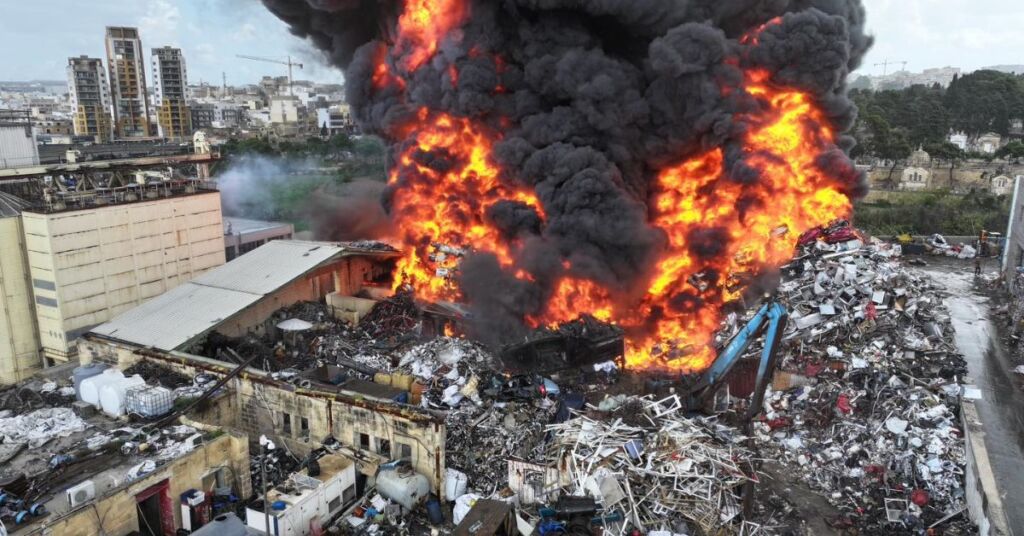
The scrapyard in Marsa that caught fire two weeks ago, has accumulated a total of €61,000 in fines from the Environment and Resources Authority (ERA), alongside the forfeiture of a €9,000 bank guarantee.
The site, operated by JAC Steel, has also been subject to multiple stop‑and‑compliance orders and enforcement notices. These enforcement actions come after the scrapyard was hit by two major fires within a four‑year span: first in 2021, and again in November of this year. Following the 2021 fire, ERA conducted hundreds of inspections at the site. Each inspection produced “detailed reports of shortcomings” that required immediate corrective action according to Times of Malta.
Among the most frequent breaches identified were damaged boundary walls, improper waste sorting and unsafe storage practices- for example, different waste categories being stored together, contrary to permit conditions.
In spite of this poor track record, ERA renewed JAC Steel’s environmental permit in 2022- asserting that the scrapyard had brought conditions up to a legally acceptable standard. Since then, ERA carried out at least 37 follow-up inspections, resulting in further administrative fines, stop‑and‑compliance orders, and enforcement notices when non‑compliance persisted.
ERA stressed that fire‑safety measures are not part of its permit‑compliance remit, and hence such safeguards are not mandatory. Nonetheless, the regulator recommended that JAC Steel hire an independent fire engineer, which the operator did, to provide contingency planning- a step outside ERA’s formal enforcement scope.
Meanwhile, neighbouring businesses, such as a nearby animal‑feed cooperative, have long complained that scrap metal from the yard often tumbled over boundary walls, and hazardous oils would leach onto their properties during rain. These issues had reportedly been flagged to authorities repeatedly over the years.
The scrapyard’s history of repeated violations, combined with two major fires, has fuelled public concern. Critics question how the permit could be renewed despite “a long list of environmental infringements” and whether enforcement has been sufficiently robust to prevent these recurring hazards.
As of now, the story stands as a stark example of how environmental oversight, enforcement, and hazardous‑waste management intersect- underscoring persistent risks when compliance frameworks fail to address deep‑rooted operational and safety problems.
What do you make of this?
Credit: Civil Protection Department via Facebook
READ NEXT: 'Paw Walk In Memory Of Jake Vella' To Support Abandoned Animals