‘Stuck In The 90s’: ONE Chairman Slams Malta’s TV Rating System As Outdated And Misleading

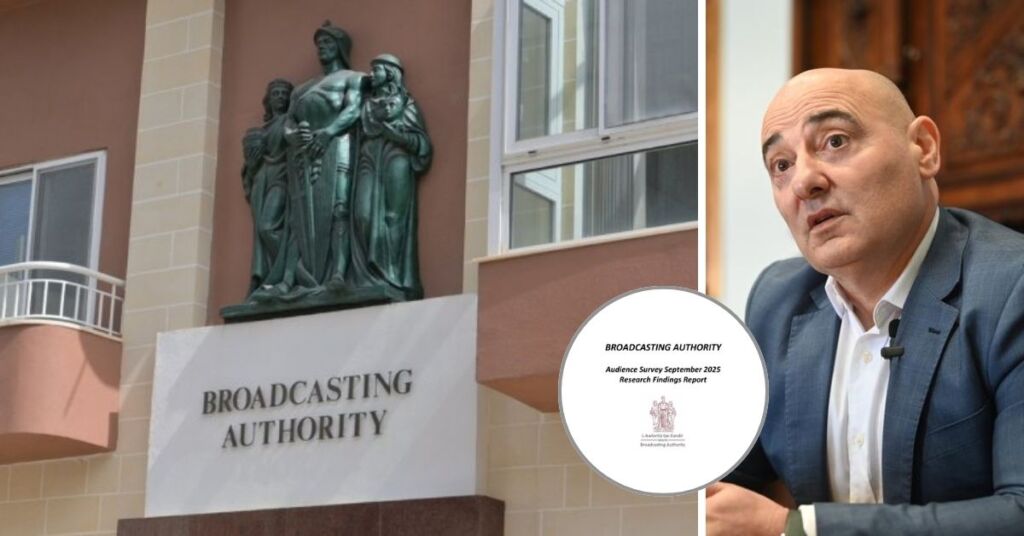
ONE chairman Silvio Scerri has sharply criticised Malta’s official TV audience measurement system, arguing that the Broadcasting Authority (BA) is relying on outdated methods that fail to reflect how the country actually watches television today.
In a opinion piece published by MaltaToday, Scerri
took aim at the BA’s long-standing practice of using a daily sample of around 300 phone calls to calculate national TV viewership—despite GO and Melita having the ability to collect real-time viewing data from more than 176,000 active set-top boxes across Malta.
Scerri described the situation as a technological absurdity: a multi-million-euro broadcasting industry still governed by survey methods that feel “like something out of the 1990s.”
He also highlighted a separate layer of irony. The company awarded the seven-year, €685,000 audience research contract—M. Fsadni & Associates—has previously appeared in court for allegedly failing to file its own state-mandated statistical questionnaires.
“One must commend the poetic symmetry,” Scerri wrote. “The company chosen to measure national viewing habits through phoned questionnaires now stands accused of not sending its own legally-mandated questionnaires.”
Beyond the controversy around the contractor, Scerri argued that the results themselves raise further questions. While digital device data from GO and Melita paints a consistent, real-time picture of household viewing, the BA’s phone survey recently reported strong performance for NET TV.
By contrast, Scerri noted that advertisers and serious broadcasters rely almost entirely on set-top box data—information they pay thousands of euros a year to access—because it is accurate, granular and impossible to influence with guesswork or political bias.
Set-top boxes log exactly what channel a household watches, and for how long. Surveys, Scerri said, depend on memory, assumptions, or respondents simply hanging up halfway through.
The Malta Communications Authority recently confirmed that more than 176,628 active TV subscriptions are capable of generating automatic viewing data, making the BA’s reliance on a 300-person-per-day phone survey even harder to justify.
Scerri argued that the Broadcasting Authority is clinging to an outdated methodology at a time when the technology for census-level measurement already exists and is being used everywhere else in the industry.
He said Maltese viewers deserve transparency—and broadcasters deserve audience metrics that match reality, not a “bargain-bin” survey system that risks skewing the national picture.